
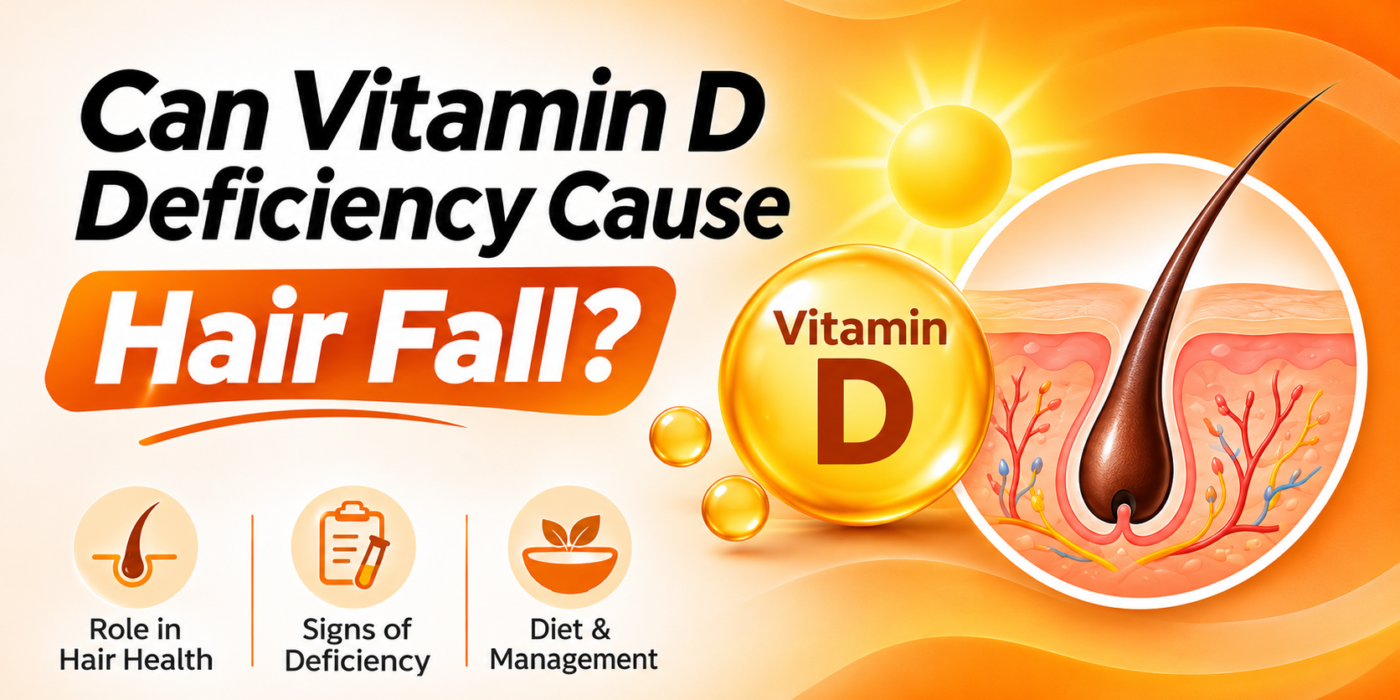

Hair fall can happen for several reasons, including
genetics, hormonal changes, nutritional deficiencies
and certain scalp conditions. One nutrient that has
received attention in hair-health research is vitamin D.
Vitamin D plays a role in several important functions
of the body, including the normal activity of hair
follicles. Some studies have found an association
between low vitamin D levels and certain hair-loss
conditions.
But does vitamin D deficiency actually cause hair fall?
Let’s understand what research suggests and when
professional assessment may be helpful.
What Is Vitamin D and Why Is It Important?
Vitamin D is a fat-soluble vitamin that supports
calcium absorption, bone health and normal immune
function. It also has roles in the functioning of
various cells throughout the body.
Vitamin D receptors are present in hair follicles.
Research suggests that vitamin D signalling may
play a role in the normal hair follicle cycle.
Can Vitamin D Deficiency Cause Hair Fall?
Low vitamin D levels have been associated with
certain hair-loss conditions, including alopecia
areata and some forms of non-scarring hair loss.
However, an association does not necessarily mean
that vitamin D deficiency is the direct cause.
Hair loss is complex and can involve several
contributing factors. A low vitamin D level alone
cannot explain every case of excessive hair shedding.
Vitamin D deficiency should be confirmed through
appropriate testing. Taking vitamin D supplements
without identifying the cause of hair loss may
not address the underlying problem.
How May Vitamin D Be Related to Hair Health?
1. Hair Follicle Function
Vitamin D receptors are involved in the biological
processes that support normal hair follicle
development and cycling.
2. Normal Cell Function
Vitamin D is involved in several cellular processes.
Its role in hair follicles is an area of ongoing
scientific research.
3. Association With Certain Hair-Loss Conditions
Research has reported lower vitamin D levels in
some people with alopecia areata. However, more
research is needed to understand the exact
relationship and whether supplementation helps
particular patients.
What Are the Common Signs of Vitamin D Deficiency?
Some people with low vitamin D levels may not
experience noticeable symptoms. When symptoms
occur, they may include:
- Persistent tiredness or fatigue.
- Bone discomfort or pain.
- Muscle weakness.
- Muscle aches or discomfort.
These symptoms are not specific to vitamin D
deficiency and can occur in other conditions.
Testing may be needed to confirm a deficiency.
How Can Vitamin D Levels Be Checked?
A healthcare professional may recommend a blood
test called 25-hydroxyvitamin D [25(OH)D] to
assess vitamin D status.
Whether testing is appropriate depends on your
symptoms, medical history and individual risk
factors. A doctor can interpret the result and
advise whether treatment is required.
How Can You Support Healthy Vitamin D Levels?
1. Include Vitamin D-Rich Foods
Depending on your dietary preferences, sources
may include oily fish, egg yolks and fortified
foods such as certain milk or cereal products.
2. Get Sensible Sunlight Exposure
Sunlight helps the body produce vitamin D.
Appropriate exposure varies with skin type,
location, season and other factors. Avoid
sunburn and excessive unprotected exposure.
3. Discuss Supplements With a Healthcare Professional
If a deficiency is confirmed, a healthcare
professional can recommend an appropriate
supplementation plan. Avoid taking high doses
without medical advice, as excessive vitamin D
can be harmful.
What Are Other Possible Causes of Hair Fall?
Vitamin D is only one possible factor to consider.
Hair shedding or thinning may also be associated
with:
- Hereditary hair loss.
- Iron deficiency and other nutritional concerns.
- Thyroid or other hormonal conditions.
- Physical or emotional stress.
- Recent illness or high fever.
- Scalp conditions and inflammation.
- Certain medicines or medical treatments.
When Should You Consult a Dermatologist?
Consider seeking professional advice if you notice:
- Sudden or excessive hair shedding.
- Gradual thinning or reduced hair density.
- Round or irregular bald patches.
- Persistent scalp itching or irritation.
- Hair fall that continues for several months.
A dermatologist may assess your scalp, review
your medical history and recommend suitable
investigations based on your individual needs.
Frequently Asked Questions
1. Does vitamin D deficiency cause hair fall?
Low vitamin D levels have been associated with
certain hair-loss conditions. However, deficiency
is not the only possible cause of hair fall,
and the relationship is still being studied.
2. Can vitamin D supplements help with hair growth?
Correcting a confirmed deficiency is important
for overall health. However, supplements are
not a guaranteed treatment for hair loss.
Their usefulness depends on the underlying
condition and individual needs.
3. Which test checks vitamin D levels?
The 25-hydroxyvitamin D blood test is commonly
used to assess vitamin D status.
4. Can I take vitamin D tablets without testing?
It is best to discuss supplementation with
a healthcare professional. High doses can
cause harmful effects, so avoid self-prescribing.
5. Is vitamin D deficiency the only reason for hair fall?
No. Hair loss can have several causes,
including genetics, hormonal changes,
nutritional deficiencies, stress and
scalp conditions.
Conclusion
Vitamin D plays a role in normal hair follicle
function, and low vitamin D levels have been
associated with some hair-loss conditions.
However, it is important not to assume that
every case of hair fall is caused by vitamin D
deficiency.
Identifying the underlying cause through
appropriate medical assessment is an important
step towards choosing suitable care.
guidance in Haridwar?
GS Tricho Derma Clinic, Haridwar, Uttarakhand,
provides dermatological consultation for
hair loss and scalp-related concerns.
This article is intended for general educational
purposes only. It is not a substitute for
professional medical advice, diagnosis or
treatment. Consult a qualified healthcare
professional for individual concerns.