
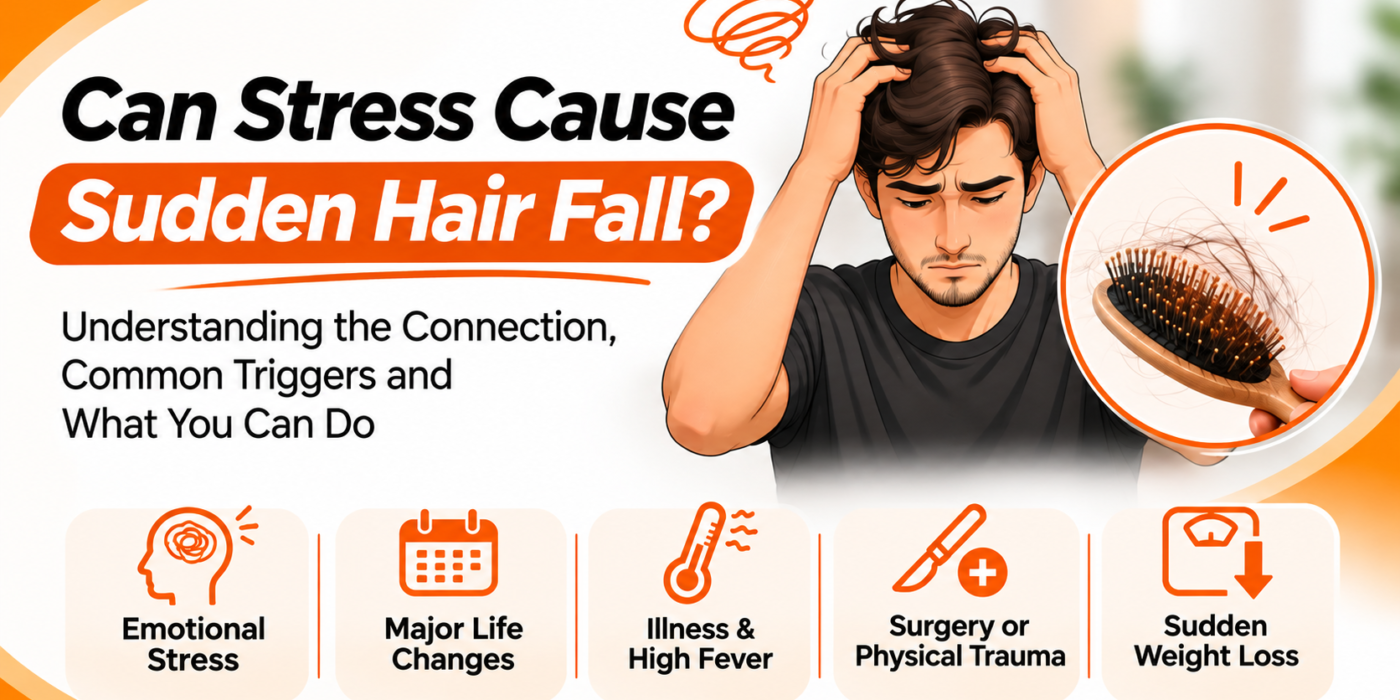
period in your life? Stress can affect several functions
of the body, including the normal hair growth cycle.
In some cases, it may contribute to increased hair shedding.
One condition associated with this type of hair shedding
is called telogen effluvium. It can occur
after physical or emotional stress and may cause noticeable
hair fall several weeks or months after the triggering event.
Let’s understand how stress can affect hair health,
what triggers stress-related hair fall and when you
should consult a dermatologist.
How Does Stress Affect the Hair Growth Cycle?
Hair normally passes through different stages of growth,
transition and resting before naturally shedding.
Significant physical or emotional stress may disrupt
this cycle.
In some individuals, stress can cause a larger number
of hair follicles to enter the resting phase
(telogen) earlier than expected. This may lead to
increased shedding after a delay.
What Is Telogen Effluvium?
Telogen effluvium is a form of temporary, diffuse hair
shedding. It can develop after events that place stress
on the body.
Common triggers include illness, high fever, surgery,
emotional stress, sudden weight loss and nutritional
changes.
Hair shedding due to telogen effluvium often becomes
noticeable around two to three months after a triggering
event. The timing can vary from person to person.
5 Common Triggers of Stress-Related Hair Fall
1. Emotional Stress and Anxiety
Prolonged emotional stress or major life changes may
affect the body’s normal functions and can be associated
with increased hair shedding.
2. Major Life Changes
Events such as bereavement, relationship difficulties,
work-related pressure or other major changes may act
as stressors for some individuals.
3. High Fever or Severe Illness
A significant illness or high fever can place physical
stress on the body. Hair shedding may become noticeable
after recovery rather than during the illness itself.
4. Surgery or Physical Trauma
Major surgery, injury or other physical trauma can
sometimes trigger temporary hair shedding as the body
recovers.
5. Sudden Weight Loss or Nutritional Changes
Crash dieting, inadequate calorie intake and nutritional
deficiencies may contribute to hair shedding. A balanced
diet is important for maintaining normal hair health.
When Does Stress-Related Hair Fall Start?
Stress-related hair shedding does not always happen
immediately after a stressful event.
In telogen effluvium, increased shedding commonly becomes
noticeable approximately two to three months after the
triggering event. This delay is one reason people may
not immediately connect their hair fall with an earlier
illness or stressful experience.
Can Stress-Related Hair Fall Be Reversed?
In many cases, telogen effluvium improves once the
triggering factor has resolved. However, recovery varies
depending on the cause, overall health and individual
circumstances.
Hair shedding may gradually reduce over several months.
Visible improvement in hair density can take longer
because hair grows slowly.
Persistent shedding should be evaluated to rule out
other possible causes of hair loss.
What Can You Do to Support Hair Health?
- Maintain a balanced and nutritious diet.
- Follow a consistent sleep routine.
- Manage stress through healthy daily habits.
- Avoid crash dieting and extreme weight loss.
- Use gentle hair-care practices.
- Seek professional advice if hair fall persists.
When Should You Consult a Dermatologist?
Not every type of hair loss is caused by stress.
Persistent or sudden hair shedding may have several
possible explanations.
Consider consulting a dermatologist if you notice:
- Sudden or excessive hair shedding.
- Visible reduction in hair density.
- Bald patches or uneven hair loss.
- Persistent scalp itching, redness or irritation.
- Hair fall that continues for several months.
A dermatologist may assess your medical history,
hair-loss pattern and scalp condition. Depending on
the findings, blood tests or other investigations
may be recommended.
Frequently Asked Questions
1. Can stress cause sudden hair fall?
Yes. Significant physical or emotional stress can
trigger telogen effluvium, a condition that causes
increased hair shedding. It often appears a few
months after the triggering event.
2. How long after stress does hair fall start?
Hair shedding associated with telogen effluvium
commonly becomes noticeable around two to three
months after a stressful event.
3. Is stress-related hair loss permanent?
Telogen effluvium is often temporary, and hair
shedding may improve after the trigger resolves.
However, recovery differs between individuals,
and other causes should be considered if shedding
continues.
4. Does anxiety cause hair thinning?
Significant or prolonged stress may contribute
to increased hair shedding in some people.
Hair thinning can also result from genetics,
hormonal changes and medical conditions.
5. Should I consult a dermatologist for hair fall?
If hair fall is sudden, excessive or persistent,
a dermatologist can help identify possible causes
and guide appropriate care.
Conclusion
Stress can affect the normal hair growth cycle and
may contribute to sudden hair shedding through
telogen effluvium. However, hair loss can have
multiple causes, and identifying the underlying
factor is important.
Maintaining healthy lifestyle habits and seeking
professional advice when necessary can help you
make informed decisions about your hair health.
guidance in Haridwar?GS Tricho Derma Clinic, Haridwar, Uttarakhand,
provides dermatological consultation for hair
loss and scalp-related concerns.
This article is intended for general educational
purposes only. It is not a substitute for professional
medical advice, diagnosis or treatment. Consult a
qualified dermatologist for individual concerns.